





research
Links
Acniti lab water tanks are custom-built research vessels for nanobubble generation experiments. Available in high-grade acrylic (PMMA) or clear PVC with 5–20 mm wall thickness, they feature leak-proof seamless construction and gas exhaust outlets. Compatible with miniGaLF, Turbiti Fusion, and microStar FS302 nanobubble generators.
Selecting a nanobubble generator can be a daunting task when you are new to the technology. In the following article we explain the differences of the various units. This helps you to select the best nanobubble generator for your research, application development or ultrafine bubble production.
Acniti partner Foreport in Taiwan conducted a vegetables young plant cultivation trial, irrigating with oxygen nanobubbles. The nanobubble irrigation water had a DO of 20 ppm versus the regular irrigation water which had 6.8 ppm. After 6 weeks results were taken it was concluded that the crop treated with nanobubbles was 25-30% heavier. The nanobubble irrigated crop also had a better developed root system which will lead to less root diseases and better survival rates during hot summers.
Oxygen plays an important role in plant respiration, which causes energy production and plant growth. Increasing the percentage of oxygen in water improves the root structure and the activity of useful microbes in the rhizosphere. Naturally, an effective and practical system can increase productivity by improving the quality of irrigation water and increasing dissolved oxygen in irrigation water. Acniti oxygen concentrator and Acniti turbiti O3 are very effective supplements for irrigation of agricultural fields and at the same time improve water quality and increase dissolved oxygen (DO) and ozone in irrigation water. To determine the role of oxygen and ozone nanobubbles in the growth of lettuce, an experimental research was conducted. Research showed that by using Acniti nanobubbles generators, will increase the level of dissolved oxygen in water, and makes the roots of lettuce grow more and its weight increases significantly.
Learn how the Complutense University of Madrid uses Acniti nanobubble technology to increase wastewater treatment efficiency and remove emerging contaminants. The research highlights that this technology enhances plants without requiring major infrastructure investments—a significant pain point for municipality and industrial plant managers.
Choosing the wrong benchtop nanobubble generator derails experimental reproducibility. Gas chemistry, shear profile, and thermal budget all determine whether miniGaLF, Turbiti Fusion, or microStar fits your protocol. This guide breaks down all three systems so your hardware matches your science, not the other way around.
The miniGaLF is Acniti's entry-level GaLF nanobubble generator, made for universities, research institutes, and companies working with ultrafine bubble technology. Pressurized dissolution drives air, oxygen, nitrogen, or CO2 into water at 450 liters per hour. Connect it to a tap and a gas source and you are running in minutes, or add the -Plus pump option to recirculate and reach higher bubble concentrations.
Discover the ultrafine GaLF, a cutting-edge generator delivering the highest concentration of nanobubbles in the Finebubble industry. Designed for researchers, universities, and labs, it’s perfect for fundamental research and product development. With advanced PLC controls and flexible gas options, this compact and robust unit ensures peak performance and easy operation. Read more to see how nanobubbles can boost cleaning, plant growth, and fish health.
Acniti offers three industrial ozone water sensors for precise measurement of dissolved ozone from 0-50 mg/L. The EL-550 provides compact UV absorption monitoring in an all-in-one housing. The EL-610 features advanced microprocessor control with separated sensor and controller. The portable CX-100 II delivers economical field measurement for calibration and on-site testing. All models serve water treatment facilities, research laboratories, and aquaculture operations.
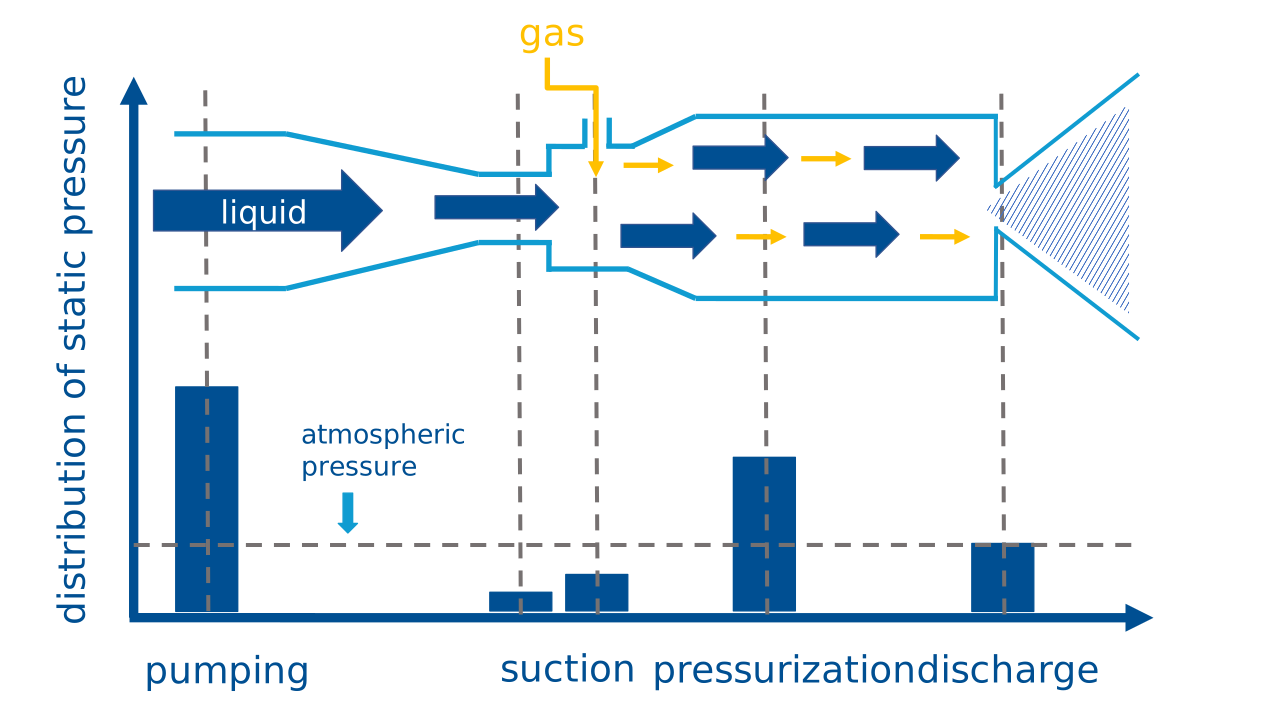
Standard venturi injection lets ozone off-gas before it can work. The Turbiti O3 Mount combines venturi injection with turbulent nanobubble mixing to keep ozone dissolved far longer. No pump or external power needed - just connect water in, out, and ozone gas. Available in models 828 and 838, covering 75-400 LPM for greenhouse disinfection, livestock drinking water, and industrial wastewater ozonation.
The Oziti ozone generator series delivers reliable output from 1 to 21 g/h using corona discharge technology. Air-cooled and built with a metal-free gas contact path, these generators produce high-purity ozone for water treatment, aquaculture, and laboratory applications. Available in multiple output ranges to match your process requirements.
Concrete is the main part of building materials and it is almost impossible to replace concrete with other natural resources. According to several scientific articles, the application of nanobubbles improved the compressive and tensile strength of concrete. on the other hand, mixture of zeolite, Chekneh pozzolan, and nanobubbles water significantly improve the strength and durability of the concrete, which is a meaningful alternative to cement and mixing water to reduce air pollution, increase concrete performance, and reduce concrete production costs. Nanobubbles technology is the best, cheapest, simplest and safest way to improve the mechanical feature of constructional materials.
The miniGaLF Plus is a lab-scale nanobubble generator designed for high-concentration research. By implementing a recirculation loop, this pressurized dissolution system achieves densities exceeding 100 million ultrafine bubbles per ml. Compatible with non-corrosive gases including O2, N2, and CO2, it features an easy-to-retrofit design for universities and industrial R&D. Ideal for precision gas-liquid mixing and zeta potential studies.
The miniGaLF is ACNITI`s entry level GaLF model designed for companies, universities, research institutes and individuals that want to learn about Ultrafine bubble technology. In this blog a movie is shown of the connections and the performance to create ultrafine bubble (nanobubbles) with high DO water.
Water is one of the fundamental components of life. A large part of living cells is made up of water. Birds need twice as much water as the food they eat. To satisfy the need for water in poultry and birds, you must make water freely available to them. Note that the unavailability and limitation of water consumed by poultry slows down their growth. The water used in poultry feeding should not contain parasites, bacteria, pollution or chemicals, and fresh and clean drinking water must be provided. Bacterial agents are one of the most common water-borne infections. Drinking contaminated and untreated water can cause huge losses in the poultry industry. Using chemicals and antibiotics to disinfect drinking water can cause health problems and drug resistance in chickens. In the last decade, researchers have tried to find a suitable alternative to disinfect and improve the quality of drinking water for farm animals, especially chickens. One of the most available and best options is oxygen-nanobubbles water. By providing oxygen- nanobubbles water, the growth and development of chickens increases, and on the other hand, it enhances their resistance against microbial infections. In this article, we evaluate the benefits of oxygen-nanobubbles water in the poultry industry.
The Oxiti Ozone is a compact PSA ozone generator with a built-in oxygen feed, producing up to 8 LPM of high-purity oxygen and up to 20 g/h of ozone from a single unit. The integrated PSA system guarantees stable, high-concentration ozone output without external oxygen supply. Built for water treatment, aquaculture research, and industrial disinfection.
Acniti offers dissolved oxygen controllers and handheld monitors designed for nanobubble generators and oxygen generators. The DO controller automates aeration using PLC-based setpoint control, while the Polaris handheld sensor provides portable DO measurement with NFC and Bluetooth. Both target aquaculture, shrimp farming, and high-DO water treatment applications.
The Acniti clear PVC lab water tank is a 17.8-liter research vessel built for controlled flow testing and water research setups. Running at 18 LPM with RC 1/2" water connections and an RC 1/4" gas outlet, it connects directly to the miniGaLF and Turbiti Fusion generators. Perspex construction with 20 mm walls keeps everything visible during testing.
Overview of ultrasonic nanobubble generation, techniques, and eco-friendly cleaning benefits.
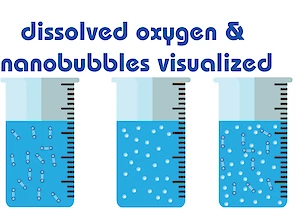
Bubbles are all around us, in our foods, beer, pop drinks bread and cheese, but also in the bricks of our house. Bubbles are gas-filled cavities in water, the lifetime of a bubble is short at most a few minutes, only ultra-fine bubbles are stable for longer periods like months, that is making them very special and that enables us to change the properties of water.
Explore groundbreaking research on air nanobubbles and their revolutionary impact on oxygen transfer in wastewater treatment systems. This comprehensive study reveals how nanobubble technology achieves six times faster dissolved oxygen increases compared to conventional aeration methods, offering significant energy savings and enhanced treatment efficiency. Learn about the experimental results using Acniti's Microstar Nanobubble Generator, which demonstrates improved oxygen mass transfer coefficients and optimal bubble size distribution.
Complete technical specifications for the Oxiti-08-115V Pressure Swing Adsorption industrial oxygen generator for non-medical research applications. Delivers 2-8 LPM at 87-96% purity for aquaculture, pond aeration, and water treatment applications. Designed for North American 115V systems with robust performance in demanding industrial environments. Not for medical or patient care use.
Complete technical specifications for the Oxiti-05-115V PSA industrial oxygen generator for non-medical research applications. Delivers 1-5 LPM at 87-96% purity for aquaculture, pond aeration, and water treatment applications. Designed for North American 115V systems with robust performance in demanding industrial environments. Not for medical or patient care use.
The miniGaLF UFB is a compact nanobubble generator using pressurized dissolution technology. It delivers 450 L/h water flow and supports oxygen, nitrogen, CO₂, and ambient air. Designed for lab-scale R&D and industrial process applications requiring precise ultrafine bubble generation.
Complete technical specifications for the Oxiti Booster 8 LPM 115V PSA industrial oxygen generator for non-medical applications. Delivers 2-8 LPM at 87-96% purity with high boosted pressure of 35-400 kPa for aquaculture, pond aeration, and water treatment. Designed for North American 115V 60Hz systems. Not for medical or patient care use.
The ELP-200 is a polarographic dissolved ozone sensor designed for wastewater treatment, pharmaceutical production, and process water disinfection control. It uses a gas-permeable membrane and three-electrode design for stable, interference-free ozone measurement from 0-10 mg/L, with automatic temperature compensation and isolated 4-20 mA output.
The Acniti OD-10LPM-SUS ozone destructor handles ozone-laden air or oxygen at flow rates from 0.1 to 10 LPM (6 to 600 L/h). The MnO2/Pd catalyst converts excess O3 to pure oxygen without consumables. Stainless steel SUS fittings with standard 6mm or 1/4" connections make it easy to integrate into existing ozone systems. Max ambient humidity: 75%.
The blenderGaLF delivers the same high-concentration ultrafine bubble performance as the GaLF series, with one key difference - your control system runs the process. No PLC, no factory settings. Built from SUS304 or SUS316 stainless steel, compatible with ozone, hydrogen, and all process gases. Available in 17, 100, and 200 LPM.
The OD-10LM-SUS-H230D is a desktop catalytic ozone destructor built for lab and research settings, running on 230V. An integrated 75W heater keeps the MnO2/Pd catalyst bed at approx. 90°C, so it stays dry and active without manual upkeep. It handles 0.1-10 LPM through SUS stainless fittings and can also run passively, with no power, as a standard ozone destructor. Rated for non-flammable, non-volatile gases only, best paired with a suction tool.
The OD-10LM-SUS-H115D is a desktop catalytic ozone destructor built for lab and research settings, running on 115V. An integrated 75W heater keeps the MnO2/Pd catalyst bed at approx. 90°C, so it stays dry and active without manual upkeep. It handles 0.1-10 LPM through SUS stainless fittings and can also run passively, with no power, as a standard ozone destructor. Rated for non-flammable, non-volatile gases only, best paired with a suction tool.
The Acniti ozone destructor safely eliminates residual ozone after treatment processes in water and air applications. Using a manganese-palladium catalyst, it converts excess O3 to pure oxygen with minimal maintenance. The modular design scales from small lab setups to large ozone contact tanks - ideal for ozone system operators who need a reliable, low-hassle off-gas solution.
Complete technical specifications for the Oxiti Mini Booster 8 LPM 200V-50Hz PSA industrial oxygen generator for non-medical applications. Delivers 2-8 LPM at 87-96% purity with boosted pressure of 35-140 kPa for aquaculture, pond aeration, and water treatment. Designed for Japanese 200V 50Hz systems. Not for medical or patient care use.
Complete technical specifications for the Oxiti Booster 5 LPM 200V-50/60Hz PSA industrial oxygen generator for non-medical applications. Delivers 1-5 LPM at 87-96% purity with boosted pressure of 35-140 kPa for aquaculture, pond aeration, and water treatment. Designed for Japanese 200V systems. Not for medical or patient care use.
Complete technical specifications for the Oxiti-01-100V-60Hz PSA laboratory oxygen generator for non-medical research applications. Delivers 0.1-1 LPM at 87-96% purity for analytical instruments, ozone generation, cell culture, biological incubation, and microreactors. Designed for Japanese 100V laboratory systems with compact, reliable performance. Not for medical or patient care use.
Complete technical specifications for the Oxiti-05-100V PSA industrial oxygen generator for non-medical research applications. Delivers 2-8 LPM at 87-96% purity for aquaculture, pond aeration, and water treatment applications. Designed for Japanese 100V systems with robust performance in demanding industrial environments. Not for medical or patient care use.
Complete technical specifications for the Oxiti-05-200V PSA industrial oxygen generator for non-medical research applications. Delivers 2-5 LPM at 87-96% purity and 35 kPa pressure for aquaculture, pond aeration, and water treatment. Designed for Japanese 200V systems with robust performance in demanding industrial environments. Not for medical or patient care use.
Complete technical specifications for the Oxiti Booster 5 LPM 100V-50/60Hz PSA industrial oxygen generator for non-medical applications. Delivers 1-5 LPM at 87-96% purity with boosted pressure of 35-400 kPa for aquaculture, pond aeration, and water treatment. Designed for Japanese 100V systems. Not for medical or patient care use.
Complete technical specifications for the Oxiti Booster 5 LPM 200V-50/60Hz PSA industrial oxygen generator for non-medical applications. Delivers 1-5 LPM at 87-96% purity with high boosted pressure of 35-400 kPa for aquaculture, pond aeration, and water treatment. Designed for Japanese 200V systems. Not for medical or patient care use.
The Oxiti Mini Booster 5L 100V-50/60Hz is a compact PSA oxygen generator built for Japanese 100V/60Hz and 50Hz supply. It delivers 1-5 LPM of oxygen at 87-96% purity with boosted output pressure of 35-140 kPa, suited for aquaculture, pond aeration, ozone generation, and water treatment systems. Not for medical or patient care use.
Complete technical specifications for the Oxiti-08-200V-60Hz PSA industrial oxygen generator for non-medical research applications. Delivers 2-8 LPM at 87-96% purity and 70-100 kPa pressure for aquaculture, pond aeration, and water treatment. Designed for Japanese 200V systems with robust performance in demanding industrial environments. Not for medical or patient care use.
Complete technical specifications for the Oxiti Booster 8 LPM 200V-50Hz PSA industrial oxygen generator for non-medical applications. Delivers 2-8 LPM at 87-96% purity with high boosted pressure of 35-400 kPa for aquaculture, pond aeration, and water treatment. Designed for Japanese 200V systems. Not for medical or patient care use.
Complete technical specifications for the Oxiti-08-200V-50Hz PSA industrial oxygen generator for non-medical research applications. Delivers 2-8 LPM at 87-96% purity and 70-100 kPa pressure for aquaculture, pond aeration, and water treatment. Designed for Japanese 200V systems with robust performance in demanding industrial environments. Not for medical or patient care use.
Complete technical specifications for the Oxiti-01-115V PSA laboratory oxygen generator for non-medical research applications. Delivers 0.1-1 LPM at 87-96% purity for analytical instruments, ozone generation, cell culture, biological incubation, and microreactors. Designed for North American 115V laboratory systems with compact, reliable performance. Not for medical or patient care use.
Traditional nanobubble generators rely on pumps and pressure, which wastes energy and stirs up water. The microStar uses patented hammermill rotation - a shaft spinning at 3,400 RPM crushes ozone gas into high-concentration nanobubbles with zero turbulence. Available in three sizes, from lab research to industrial disinfection and seawater treatment.
The Ultramax O2 is a portable 3-in-1 oxygen gas analyzer that measures O2 purity, flow rate, and pressure in one compact device. Using ultrasonic sensor technology, it requires no sensor replacements and no field calibration - ideal for oxygen generator monitoring, industrial gas analysis, and environmental testing.
The Oxiti Booster 8L 230V is an industrial PSA oxygen generator delivering 2-8 LPM oxygen at 87-96% purity with integrated pressure booster (35-400 kPa). Designed for water treatment, pond aeration, aquaculture, and fish cultivation applications. Complete technical specifications for the European and Asian markets (230V, 50/60Hz). Not for medical or patient care use.
The Oxiti Ozone is a compact PSA oxygen generator with a built-in ozone generator, delivering up to 8 LPM of high-purity oxygen and 12 g/h of ozone from a single 115V unit. Designed for aquaculture, pond water treatment, and industrial aeration where both oxygen enrichment and ozone disinfection are needed.
ISO TC281 sets standards for ultrafine bubbles, improving water oxygenation and boosting plant growth with Acniti technology.
acniti agri biostimulants, probiotics competes with sickening microorganisms. Bacterial species in tablet form remove the food source for the sickening bacteria
Ozone nanobubbles are attractive for water purification, treatment, and disinfection. ozone nanobubbles have a higher mass transfer rate than ordinary bubbles and there for nanobubbles more efficiently use ozone as a powerful oxidizing agent and sterilizer to kill or inactivate bacteria and viruses.