





Modified: Wednesday, 28 January 2026

Partner Foreport Taiwan: Good results growing young plants with oxygen nanobubbles
Acniti partner Foreport in Taiwan conducted a vegetables young plant cultivation trial, irrigating with oxygen nanobubbles. The nanobubble irrigation water had a DO of 20 ppm versus the regular irrigation water which had 6.8 ppm. After 6 weeks results were taken it was concluded that the crop treated with nanobubbles was 25-30% heavier. The nanobubble irrigated crop also had a better developed root system which will lead to less root diseases and better survival rates during hot summers.
Introduction Foreport

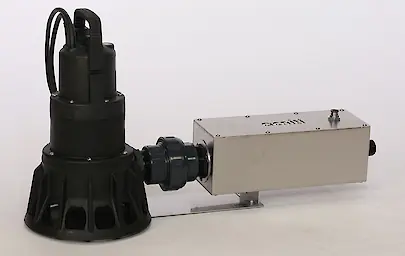
Acniti partner Foreport was set up in 1979 with their head office in Taipei. Foreport specializes in import and export of horticulture products. This includes seeds, plants, bulbs as well as related material and equipment. Besides service they give to Taiwanese growers by their technical team, they also have three nurseries in Taoyuan, Puli, and Chin Jing. The primary function of the greenhouses is to do trials for new varieties, produce seedlings, rooted cutting, store bulbs and related materials. Foreport became an Acniti partner in 2019 for the sales installation and support of the turbiti nanobubble generators.
In December 2019 till February 2020 Foreport did commercial nanobubble trials with young plants. The purpose was to show the power of the turbiti submersible nanobubble generators to their customers.
Research
Taiwan is known for it hot and humid climate, the months December, January and February are different in terms of light and temperature. During this period, all plant growth is determined by the amount of natural light. All crops under cultivation slow-down in development during the winter season. Even though natural light is the limiting factor in growth we could see significant differences in crop performance of plants treated with nanobubble oxygen water and the crop grown with normal water.
Research setup


For 15 tons of water the turbiti submersible unit runs 4 hours. Incoming water measuring 6.5 ppm of dissolved oxygen. The DO was set on 20 ppm in the tank, with a loss of a little less than 10% through the water system this translated to 18.3 ppm in the greenhouse at the plant roots. Irrigation recipe had the normal intervals during cultivation.
Results of observations and conclusions

Results cultivating vegetables with and without O2 nanobubble after transplant 6 weeks
| Product | treatment | remarks | height (cm) | reaf number | weight (g) |
|---|---|---|---|---|---|
| Brassica rapa var. perviridis | nanobubbles | O2-O2 | 16.4 | 8.5 | 25.9 |
| (小松菜 komatsuna) | normal | CK-CK | 15.3 | 8.4 | 20.4 |
| Brassica chinensis Linn | nanobubbles | O2-O2 | 12.0 | 12.1 | 31.2 |
| (青江菜 spoon kool) | normal | CK-CK | 10.4 | 11.9 | 24.6 |
| lettus "black leaf" | nanobubbles | O2-O2 | 14.5 | 8.0 | 26.6 |
| (黑葉) | normal | CK-CK | 12.6 | 7.9 | 20.4 |
Research text and photos by Foreport Enterprises Ltd. in Taiwan