





ozone
Ozone Gas Concentration Unit Conversion Table Explained

Discover everything about ozone technology: unit conversions, generators, nanobubble mixers, and sensors for water treatment and disinfection. Acniti’s ozone page explains practical applications for aquaculture, food, pharma, and environmental safety. Explore innovative solutions for accurate ozone measurement and eco-friendly purification to optimize your processes and improve water quality. Read on for in-depth industry insights and product details.
Ozone concentration is measurable in several different units depending on the application, industry, or measurement environment. Here is an explanation of the conversion table found on the Acniti website, which shows conversions between commonly used ozone concentration units:
| G/nM3 | PPM | VOL% | WT% |
| 1 | 466.666667 | 0.04666667 | 0.06998367 |
| 10 | 4,666.66667 | 0.46666667 | 0.69837047 |
| 100 | 46,666.6667 | 4.6666667 | 6.84039088 |
| 0.00214286 | 1 | 0.0001 | 0.00015 |
| 0.02142857 | 10 | 0.001 | 0.00149999 |
| 0.21428571 | 100 | 0.01 | 0.01499925 |
| 21.4285714 | 10,000 | 1 | 1.49253731 |
| 214.285714 | 100,000 | 10 | 14.2857143 |
| 428.571429 | 200,000 | 20 | 27.2727273 |
| 14.3334926 | 6,688.96321 | 0.66889632 | 1 |
| 147.783251 | 68,965.5172 | 6.89655172 | 10 |
| 306.122449 | 142,857.143 | 14.2857143 | 20 |
| 2142.85714 | 1,000,000 | 100 | 100 |
Units Explained
G/nm³ (grams per normal cubic meter):
PPM (parts per million):
VOL% (volume percent):
WT% (weight percent):
How to Use the Table
Practical Example
If an ozone generator produces 10 G/nm³, the table shows this is equivalent to:
Remarks
Links
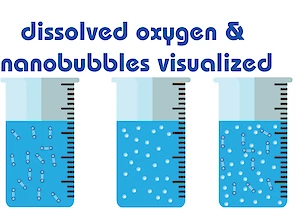
Ozone nanobubbles are attractive for water purification, treatment, and disinfection. ozone nanobubbles have a higher mass transfer rate than ordinary bubbles and there for nanobubbles more efficiently use ozone as a powerful oxidizing agent and sterilizer to kill or inactivate bacteria and viruses.
The Oxiti Ozone is a compact PSA ozone generator with a built-in oxygen feed, producing up to 8 LPM of high-purity oxygen and up to 20 g/h of ozone from a single unit. The integrated PSA system guarantees stable, high-concentration ozone output without external oxygen supply. Built for water treatment, aquaculture research, and industrial disinfection.
The PHNX-100 is a wall-mounted electrochemical ozone leak detector for continuous real-time monitoring of ozone concentrations from 0-1 or 0-10 ppm. It triggers visual and acoustic alarms when thresholds are exceeded, and the sensor is replaceable without recalibration. Designed for labs, HVAC systems, water treatment, and any facility using ozone for disinfection or purification.
The Acniti ozone destructor safely eliminates residual ozone after treatment processes in water and air applications. Using a manganese-palladium catalyst, it converts excess O3 to pure oxygen with minimal maintenance. The modular design scales from small lab setups to large ozone contact tanks - ideal for ozone system operators who need a reliable, low-hassle off-gas solution.
Chlorine odors, algae, and rising chemical costs are the problems Swim Puriti O3 is built to solve. This pool nanobubble generator delivers ozone-enriched ultrafine bubbles directly into your return line, combining powerful oxidation with nanobubble persistence for crystal-clear, low-chemical water. Available in seven sizes from 75 to 600 LPM for residential, spa, and commercial pools.
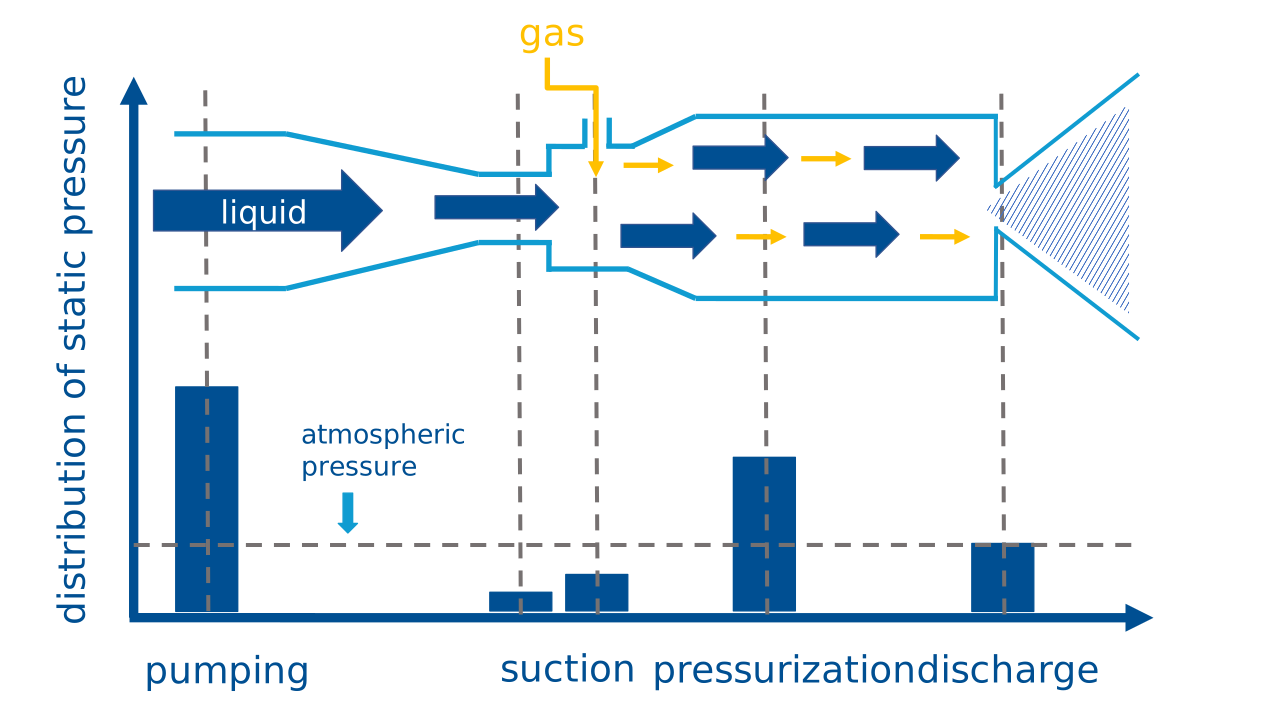
Standard venturi injection lets ozone off-gas before it can work. The Turbiti O3 Mount combines venturi injection with turbulent nanobubble mixing to keep ozone dissolved far longer. No pump or external power needed - just connect water in, out, and ozone gas. Available in models 828 and 838, covering 75-400 LPM for greenhouse disinfection, livestock drinking water, and industrial wastewater ozonation.
Nanobubble Ozonation is a highly effective water treatment process that utilizes ozone's powerful oxidizing properties to disinfect water, eliminate viruses, bacteria, and other pathogens. It also removes contaminants like iron and manganese, improving taste and odor. This method generates no harmful residuals, making it an eco-friendly choice for safe drinking water preparation.
The ELP-200 is a polarographic dissolved ozone sensor designed for wastewater treatment, pharmaceutical production, and process water disinfection control. It uses a gas-permeable membrane and three-electrode design for stable, interference-free ozone measurement from 0-10 mg/L, with automatic temperature compensation and isolated 4-20 mA output.
Acniti offers three industrial ozone water sensors for precise measurement of dissolved ozone from 0-50 mg/L. The EL-550 provides compact UV absorption monitoring in an all-in-one housing. The EL-610 features advanced microprocessor control with separated sensor and controller. The portable CX-100 II delivers economical field measurement for calibration and on-site testing. All models serve water treatment facilities, research laboratories, and aquaculture operations.
ozone nanobubbles
The Acniti ozone gas sensor uses UV absorption technology to deliver accurate, real-time O3 concentration measurements from 0-60 g/Nm3. Built for industrial safety, water treatment, aquaculture, and greenhouse monitoring where reliable ozone detection keeps people and processes safe.
Gas check valve ozone to avoid water in the ozone generator made from stainless steel 316L with viton seals
Choosing the wrong benchtop nanobubble generator derails experimental reproducibility. Gas chemistry, shear profile, and thermal budget all determine whether miniGaLF, Turbiti Fusion, or microStar fits your protocol. This guide breaks down all three systems so your hardware matches your science, not the other way around.
Ozone is one of the most powerful disinfectants available, but getting it into water efficiently is the challenge. Turbiti Ozone nanobubble mixers use proprietary swirl flow technology to dissolve ozone as ~100 nm bubbles, extending ozone residual and improving treatment performance across a range of water volumes and applications.
The Oziti ozone generator series delivers reliable output from 1 to 21 g/h using corona discharge technology. Air-cooled and built with a metal-free gas contact path, these generators produce high-purity ozone for water treatment, aquaculture, and laboratory applications. Available in multiple output ranges to match your process requirements.
Ozone vacuum break a product to protect ozone generators and ozone destructors.
Measuring dissolved ozone in water is complex—conventional electrochemical and UV methods struggle with interference and cost. The CX-100II uses an innovative vapor-liquid separator method to deliver fast, accurate on-site measurements of dissolved ozone and minor water components with minimal complexity.
Oxygen plays an important role in plant respiration, which causes energy production and plant growth. Increasing the percentage of oxygen in water improves the root structure and the activity of useful microbes in the rhizosphere. Naturally, an effective and practical system can increase productivity by improving the quality of irrigation water and increasing dissolved oxygen in irrigation water. Acniti oxygen concentrator and Acniti turbiti O3 are very effective supplements for irrigation of agricultural fields and at the same time improve water quality and increase dissolved oxygen (DO) and ozone in irrigation water. To determine the role of oxygen and ozone nanobubbles in the growth of lettuce, an experimental research was conducted. Research showed that by using Acniti nanobubbles generators, will increase the level of dissolved oxygen in water, and makes the roots of lettuce grow more and its weight increases significantly.
The Oziti 1G is a compact benchtop ozone generator delivering up to 1 g/h of ozone via pulse corona discharge technology. With a maximum flow rate of 1 LPM and universal 100-240V input, it integrates easily with the Oxiti-01 oxygen concentrator or dry air supply for water treatment, lab research, and small-scale disinfection applications.
Selecting a nanobubble generator can be a daunting task when you are new to the technology. In the following article we explain the differences of the various units. This helps you to select the best nanobubble generator for your research, application development or ultrafine bubble production.
Turbiti Fusion Integra combines ozone nanobubble generator with integrated, oxygen and ozone generator, includes a mixing tank, sensor and ozone destructor
The O3 ozone generator delivers up to 12 g/hr of ozone from a compact, wall-mountable unit. A double quartz corona cell ensures pure ozone with no metal contact. Digitally adjustable output (0-100%) and a built-in flow meter make it ready for water treatment, aquaculture, and industrial disinfection applications running on 100-240VAC.
The Oxiti Ozone is a compact PSA oxygen generator with a built-in ozone generator, delivering up to 8 LPM of high-purity oxygen and 12 g/h of ozone from a single 230V unit. Designed for aquaculture, pond water treatment, and industrial aeration where both oxygen enrichment and ozone disinfection are needed.
The Oxiti Ozone is a compact PSA oxygen generator with a built-in ozone generator, delivering up to 8 LPM of high-purity oxygen and 12 g/h of ozone from a single 115V unit. Designed for aquaculture, pond water treatment, and industrial aeration where both oxygen enrichment and ozone disinfection are needed.
The O3 ozone generator delivers up to 12 g/hr of ozone from a compact, wall-mountable unit. A double quartz corona cell ensures pure ozone with no metal contact. Digitally adjustable output (0-100%) and a built-in flow meter make it ready for water treatment, aquaculture, and industrial disinfection applications running on 100-240VAC.
The Acniti OD-10LPM-SUS ozone destructor handles ozone-laden air or oxygen at flow rates from 0.1 to 10 LPM (6 to 600 L/h). The MnO2/Pd catalyst converts excess O3 to pure oxygen without consumables. Stainless steel SUS fittings with standard 6mm or 1/4" connections make it easy to integrate into existing ozone systems. Max ambient humidity: 75%.
The OD-10LM-SUS-H230D is a desktop catalytic ozone destructor built for lab and research settings, running on 230V. An integrated 75W heater keeps the MnO2/Pd catalyst bed at approx. 90°C, so it stays dry and active without manual upkeep. It handles 0.1-10 LPM through SUS stainless fittings and can also run passively, with no power, as a standard ozone destructor. Rated for non-flammable, non-volatile gases only, best paired with a suction tool.
The OD-10LM-SUS-H115D is a desktop catalytic ozone destructor built for lab and research settings, running on 115V. An integrated 75W heater keeps the MnO2/Pd catalyst bed at approx. 90°C, so it stays dry and active without manual upkeep. It handles 0.1-10 LPM through SUS stainless fittings and can also run passively, with no power, as a standard ozone destructor. Rated for non-flammable, non-volatile gases only, best paired with a suction tool.
The Turbiti 858 O3 is an ozone nanobubble mixer using pressurized dissolution to generate ozone ultrafine bubbles at 800-1200 LPM. Built with ozone-resistant materials - polycarbonate, PVC, and EPDM - it connects via venturi gas injection and is designed for high-flow water treatment, aquaculture, and industrial ozone applications.
chicken
poultry nanobubbles solutions
Water is one of the fundamental components of life. A large part of living cells is made up of water. Birds need twice as much water as the food they eat. To satisfy the need for water in poultry and birds, you must make water freely available to them. Note that the unavailability and limitation of water consumed by poultry slows down their growth. The water used in poultry feeding should not contain parasites, bacteria, pollution or chemicals, and fresh and clean drinking water must be provided. Bacterial agents are one of the most common water-borne infections. Drinking contaminated and untreated water can cause huge losses in the poultry industry. Using chemicals and antibiotics to disinfect drinking water can cause health problems and drug resistance in chickens. In the last decade, researchers have tried to find a suitable alternative to disinfect and improve the quality of drinking water for farm animals, especially chickens. One of the most available and best options is oxygen-nanobubbles water. By providing oxygen- nanobubbles water, the growth and development of chickens increases, and on the other hand, it enhances their resistance against microbial infections. In this article, we evaluate the benefits of oxygen-nanobubbles water in the poultry industry.
Washing of surfaces and laundry is one of the promising areas were nanobubbles can make a difference in the application. Reducing the amount of detergent, has a positive effect by reducing pollution, washing laundry without detergent, would greatly benefit the environment. Nanobubbles can lower the surface tension of water, the large amounts of oxygen molecules in bubbles charge the water negative.
The Turbiti 828 O3 is an ozone nanobubble mixer with venturi gas injection, handling 75-150 LPM of water flow. Built with ozone-resistant ASA, PVC, and EPDM wetted parts, it pairs with single-stage centrifugal pumps and requires no built-in control system. Designed for water treatment and aquaculture applications where ozone nanobubble dosing is needed.
The EL-550 is a compact ozone water sensor combining detection and processing in a single all-in-one housing. Using UV absorption technology, it measures dissolved ozone from 0-50 mg/L (default) with ranges up to 150 mg/L available. This cost-effective monitor features analog outputs (0-1V, 0-10V, or 4-20mA), digital display with rotary selection, and operates from 5-40°C water temperature. Ideal for industrial water treatment, research laboratories, and aquaculture applications requiring reliable ozone monitoring.
A rack-mountable ozone generator that produces up to ~50 g/hr of ozone @ 16 l/min of oxygen. The ozone generator uses double-quartz technology for ultra-pure, high-concentration applications. The double quartz technology is tuned specifically for oxygen and can therefore only be run with oxygen as the feed gas.
The Turbiti Fusion is a plug-and-play micro nanobubble generator using a turbulent mixer-ejector principle to produce billions of ultrafine bubbles per minute. With flow rates of 540–900 L/h and compatibility with O₂, air, CO₂, N₂ and ozone, it delivers superior dissolved oxygen levels for water treatment, aquaculture, and biochemical processes. Available in 115V and 230V configurations.
The SwimPuriti 838 O3 is a wall-mount ozone nanobubble mixer designed for swimming pool water treatment. It handles 150 to 400 LPM of water flow and injects ozone safely via venturi under vacuum. Built for commercial pool operators who need effective, chemical-efficient disinfection.
The Oziti 5G is a compact research-grade ozone generator producing 5 g/h of ozone via a 3-layer quartz corona discharge tube. It runs on universal 100-240V power and is sized for laboratory and small-scale water treatment applications. Built in Japan for consistent ozone output and long tube life.
The Turbiti 808 O3 is an OEM venturi-based ozone nanobubble mixer delivering 9-15 LPM of ozone-saturated water. Built from ozone-resistant polycarbonate/ASA and EPDM rubber, it connects inline via 10mm push-fit fittings. Designed for water treatment, aquaculture, and disinfection systems where reliable ozone nanobubble generation is required.
The Turbiti ozone nanobubble mixer uses a venturi to inject ozone gas directly into the water stream, generating ultrafine ozone bubbles at 150-400 LPM. Wetted parts are polycarbonate, PVC, and EPDM rubber - all ozone-resistant. Designed for water treatment, aquaculture, and disinfection applications requiring high-flow ozone nanobubble generation.
The Turbiti 848 O3 is a venturi-driven ozone nanobubble mixer handling 400-600 LPM of water flow. It dissolves ozone gas into ultrafine bubbles for water treatment, aquaculture, and industrial aeration. The OEM design integrates directly into pump systems with ozone-resistant wetted parts.
The Acniti OD-25LPM-SUS ozone destructor handles ozone-laden air or oxygen at flow rates from 0.1 to 25 LPM (6 to 1500 L/h). The MnO2/Pd catalyst converts excess O3 to pure oxygen without consumables. Stainless steel SUS fittings with standard 10mm or 3/8" connections make it easy to integrate into existing ozone systems. Max ambient humidity: 75%.
The Turbiti Fusion 808 230V is a compact nanobubble generator designed for lab and small-scale industrial use. Using turbulent mixer ejector technology, it handles O2, O3, CO2, and N2 gases at flow rates of 9–15 LPM. The stainless steel pump makes it ideal for demanding ozone applications in water treatment and research.
The Oxiti Ozone is a compact PSA oxygen generator with a built-in ozone generator, delivering up to 8 LPM of high-purity oxygen and 20 g/h of ozone from a single 230V unit. Designed for aquaculture, pond water treatment, and industrial aeration where both oxygen enrichment and ozone disinfection are needed.
The Oxiti Ozone is a compact PSA oxygen generator with a built-in ozone generator, delivering up to 5 LPM of high-purity oxygen and 20 g/h of ozone from a single 115V unit. Designed for aquaculture, pond water treatment, and industrial aeration where both oxygen enrichment and ozone disinfection are needed.
The Oxiti Ozone is a compact PSA oxygen generator with a built-in ozone generator, delivering up to 5 LPM of high-purity oxygen and 20 g/h of ozone from a single 230V unit. Designed for aquaculture, pond water treatment, and industrial aeration where both oxygen enrichment and ozone disinfection are needed.
The Oxiti Ozone is a compact PSA oxygen generator with a built-in ozone generator, delivering up to 8 LPM of high-purity oxygen and 20 g/h of ozone from a single 115V unit. Designed for aquaculture, pond water treatment, and industrial aeration where both oxygen enrichment and ozone disinfection are needed.
The EG-550 uses UV absorption technology to measure ozone gas concentration with high accuracy and long-term stability in portable and embedded systems. Unlike polarographic sensors, UV absorption delivers drift-free readings without consumable parts. With a flow range of 0.1 to 3.0 L/min and AC 100-220V support, it fits a range of industrial setups including aquaculture, water treatment, and ozone safety monitoring.
The Oxiti Ozone is a compact PSA oxygen generator with a built-in ozone generator, delivering up to 5 LPM of high-purity oxygen and 20 g/h of ozone from a single 100V unit. Designed for aquaculture, pond water treatment, and industrial aeration where both oxygen enrichment and ozone disinfection are needed.