




fine bubbles

Links
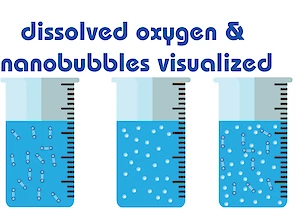
Not all bubbles behave the same. Milli, micro, and nanobubbles each have distinct physical properties that determine how gas transfers in water, how long bubbles persist, and how useful they are in real applications. This guide breaks down bubble size categories, surface area physics, zeta potential, and gas pressure - so you can choose the right bubble technology for your process.
Bubbles are all around us, in our foods, beer, pop drinks bread and cheese, but also in the bricks of our house. Bubbles are gas-filled cavities in water, the lifetime of a bubble is short at most a few minutes, only ultra-fine bubbles are stable for longer periods like months, that is making them very special and that enables us to change the properties of water.
Great things happen when the world agrees, fine bubbles are an innovative technology, but without proper standards for the industry development, there are obstacles. From 2013 ISO started the creation of an International Standard for fine bubbles popularly know as nanobubbles.
Washing of surfaces and laundry is one of the promising areas were nanobubbles can make a difference in the application. Reducing the amount of detergent, has a positive effect by reducing pollution, washing laundry without detergent, would greatly benefit the environment. Nanobubbles can lower the surface tension of water, the large amounts of oxygen molecules in bubbles charge the water negative.
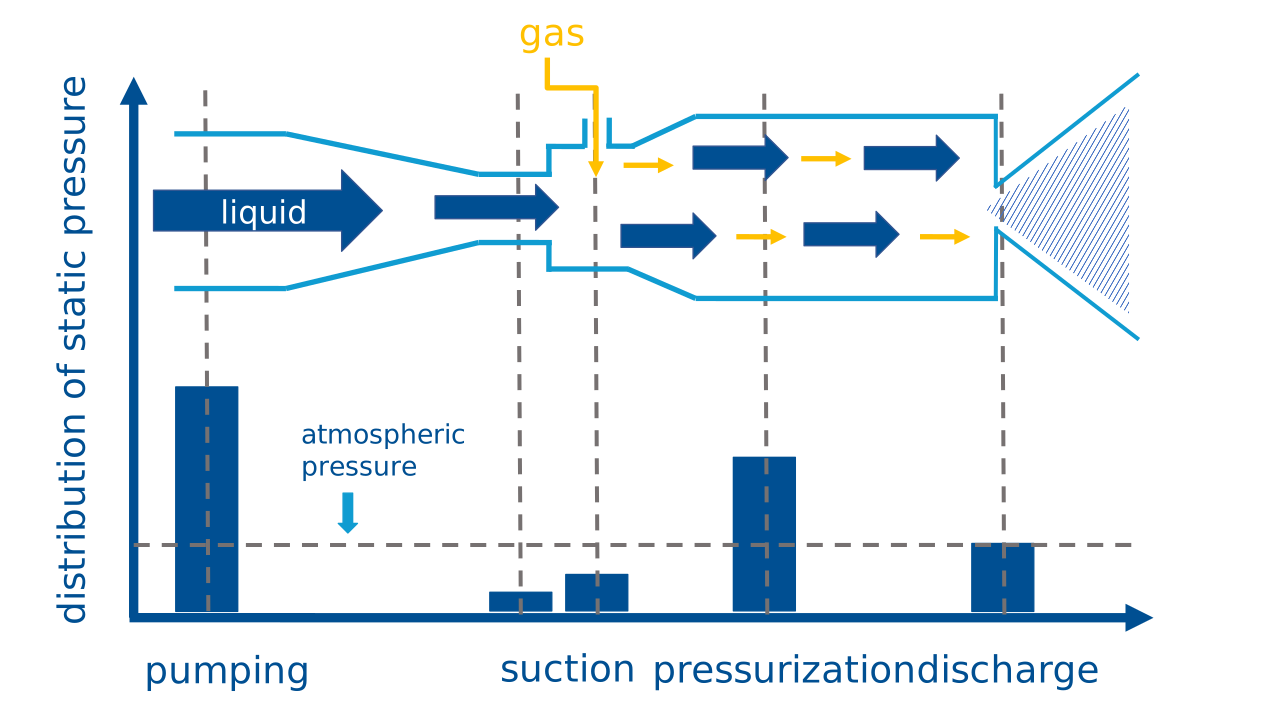
There are various technologies to generate nanobubbles (ultrafine bubbles). This article gives an overview of the most used techniques, such as pressurized dissolution, static mixers, and rotational flow.
Nanobubbles can be measured by the same technology as measuring small particles. You can measure bubbles by camera (count pixel size) or laser (count blackout time), also as a simple method to know number index, you can refer information of turbidity. When you measure UFB, most common way is to analyze Brownian Motion.
The electrical properties of gas bubbles are important in determining the interaction of nano-bubbles if and when they merge together and how they interact with other materials such as solid particles or oil droplets. Knowledge about this helps application development in for example, protein skimmers, froth flotation, food processing, washing surfaces and purification.
Interested to know why nanobubbles are officially called ultrafine bubbles? In this article we explain the reasons why the ISO technical committee has decided to use the official name ultrafine bubbles instead of nanobubbles.
Selecting a nanobubble generator can be a daunting task when you are new to the technology. In the following article we explain the differences of the various units. This helps you to select the best nanobubble generator for your research, application development or ultrafine bubble production.
A technical exploration of the physics behind oxygen nanobubbles, detailing the Young-Laplace equation, ultrafine bubble internal pressure effects, and mass transfer coefficients. Ideal for engineers and scientists looking to optimize oxygenation in water treatment, aquaculture, and hydroponics.
Ensure optimum performance of your ultrafine bubble generator with the ALT-9F17—an advanced nanobubble sensor that provides accurate, real-time monitoring using the scattered laser method. Discover how this compact and user-friendly solution helps you control water quality, reduce costs, and enhance operational efficiency. Explore its key specifications, features, and application benefits to unlock superior water management.
Discover the ultrafine GaLF, a cutting-edge generator delivering the highest concentration of nanobubbles in the Finebubble industry. Designed for researchers, universities, and labs, it’s perfect for fundamental research and product development. With advanced PLC controls and flexible gas options, this compact and robust unit ensures peak performance and easy operation. Read more to see how nanobubbles can boost cleaning, plant growth, and fish health.
Chlorine-heavy pools cause skin irritation, red eyes, and persistent chemical odors. Nanobubble technology injects billions of microscopic oxygen bubbles that oxidize contaminants naturally, reducing chemical dependency. The result: crystal-clear, odor-free water with far less maintenance.
ISO TC281 sets standards for ultrafine bubbles, improving water oxygenation and boosting plant growth with Acniti technology.
Imagine your kitchen floor or bathroom tiles being cleaned by very tiny bubbles. Sounds great, a new technological era is dawning.
Concrete is the main part of building materials and it is almost impossible to replace concrete with other natural resources. According to several scientific articles, the application of nanobubbles improved the compressive and tensile strength of concrete. on the other hand, mixture of zeolite, Chekneh pozzolan, and nanobubbles water significantly improve the strength and durability of the concrete, which is a meaningful alternative to cement and mixing water to reduce air pollution, increase concrete performance, and reduce concrete production costs. Nanobubbles technology is the best, cheapest, simplest and safest way to improve the mechanical feature of constructional materials.
A new innovative way to transport fish while sleeping is almost ready to go onto the market. A combination of CO2 and ultrafine bubbles make this possible.
Explore Henry's law in acniti nanobubble technology: learn how gas solubility, pressure and supersaturation influence micro and nanobubble generation.
Overview of ultrasonic nanobubble generation, techniques, and eco-friendly cleaning benefits.
Carnation flower growers in Japan use nanobubble irrigation technology against fusarium, withering and dying plants, to improve stem quality, flower size, shoot count, volume of stems and growth speed. In the growing season 2017 / 2018, acniti conducted trials, the test area had irrigation water with billions of ultrafine bubbles of an average size of 110 nm and high DO water with 30 mg/l.
Probiotics water treatment with nanobubbles and powerful micro-organisms and bacteria. Efficient micro-organisms working in combination with ultra-fine bubbles
Nanobubbles generation technology pressurized dissolution method
Pool water problems - excess chemicals, chloramine odors, cloudy water - are exactly what Swim Puriti O2 is built to solve. This pool nanobubble generator infuses oxygen-rich ultrafine bubbles into your return line, reducing chemical use by 50-100% while delivering softer, clearer water. Available in three sizes from 75 to 600 LPM for residential, spa, and commercial pools.
Oxygen plays an important role in plant respiration, which causes energy production and plant growth. Increasing the percentage of oxygen in water improves the root structure and the activity of useful microbes in the rhizosphere. Naturally, an effective and practical system can increase productivity by improving the quality of irrigation water and increasing dissolved oxygen in irrigation water. Acniti oxygen concentrator and Acniti turbiti O3 are very effective supplements for irrigation of agricultural fields and at the same time improve water quality and increase dissolved oxygen (DO) and ozone in irrigation water. To determine the role of oxygen and ozone nanobubbles in the growth of lettuce, an experimental research was conducted. Research showed that by using Acniti nanobubbles generators, will increase the level of dissolved oxygen in water, and makes the roots of lettuce grow more and its weight increases significantly.
Explore zeta potential's role in nanobubble stability and surface charge dynamics. Learn how this key parameter affects gas transfer efficiency and applications
The Turbiti Fusion is a plug-and-play micro nanobubble generator using a turbulent mixer-ejector principle to produce billions of ultrafine bubbles per minute. With flow rates of 540–900 L/h and compatibility with O₂, air, CO₂, N₂ and ozone, it delivers superior dissolved oxygen levels for water treatment, aquaculture, and biochemical processes. Available in 115V and 230V configurations.