




contact

Links
This privacy policy explains how Acniti collects, uses, and protects personal information from customers and visitors. As a manufacturer of nanobubble generators and PSA oxygen generators, we are committed to handling your data lawfully, transparently, and securely. Review our data protection practices and your privacy rights below.
Ozone nanobubbles are attractive for water purification, treatment, and disinfection. ozone nanobubbles have a higher mass transfer rate than ordinary bubbles and there for nanobubbles more efficiently use ozone as a powerful oxidizing agent and sterilizer to kill or inactivate bacteria and viruses.
Acniti is a Japanese manufacturer specializing in nanobubble equipment and industrial oxygen concentrators. Based in Osaka since 2017, we are the only provider offering three distinct nanobubble generation technologies: pressurized dissolution, turbulent static mixer, and hammer-mill rotation. Our solutions serve universities, water treatment, aquaculture, agriculture, mining, wastewater remediation, and industrial cleaning applications globally. Acniti products integrate robust PSA oxygen concentrators with proprietary nanobubble generators for 24/7 industrial operation. Acniti does not supply oxygen concentrators for medical purposes.
Choosing the wrong benchtop nanobubble generator derails experimental reproducibility. Gas chemistry, shear profile, and thermal budget all determine whether miniGaLF, Turbiti Fusion, or microStar fits your protocol. This guide breaks down all three systems so your hardware matches your science, not the other way around.
Ensure optimum performance of your ultrafine bubble generator with the ALT-9F17—an advanced nanobubble sensor that provides accurate, real-time monitoring using the scattered laser method. Discover how this compact and user-friendly solution helps you control water quality, reduce costs, and enhance operational efficiency. Explore its key specifications, features, and application benefits to unlock superior water management.
Not all bubbles behave the same. Milli, micro, and nanobubbles each have distinct physical properties that determine how gas transfers in water, how long bubbles persist, and how useful they are in real applications. This guide breaks down bubble size categories, surface area physics, zeta potential, and gas pressure - so you can choose the right bubble technology for your process.
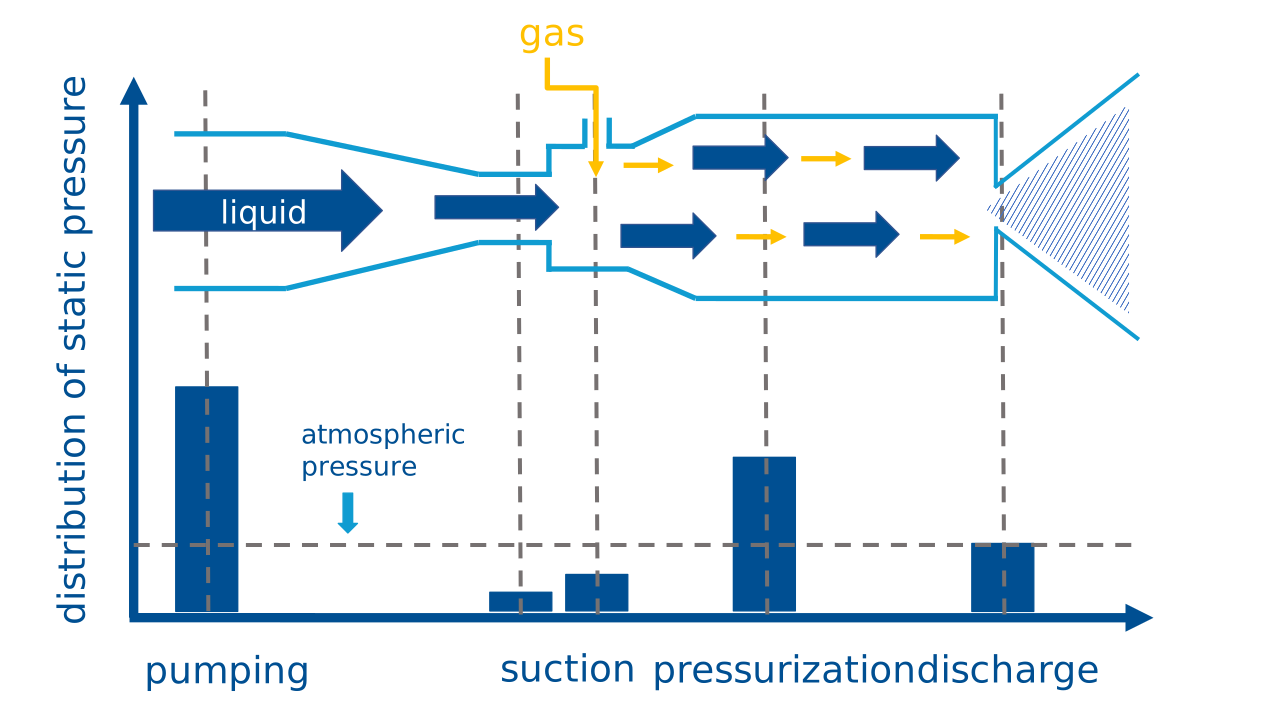
There are various technologies to generate nanobubbles (ultrafine bubbles). This article gives an overview of the most used techniques, such as pressurized dissolution, static mixers, and rotational flow.
The ALT-9F17 is a laser-based nanobubble sensor validated for real-time ultrafine bubble monitoring at a fraction of NanoSight lab costs. With a 0.992 correlation against the NS500, it's a proven NanoSight alternative for industrial process control, automated nanobubble concentration measurement, and energy optimization - bringing accurate ultrafine bubble monitoring out of the lab and into production.
Discover how Nitrogen nanobubble technology from Acniti revolutionizes chiller maintenance, dramatically reducing corrosion, biofilm, and scaling issues for reliable, efficient cooling. Learn about proven results, easy retrofitting, sustainable water treatment, and why nanobubbles offer both cost and regulatory advantages for facilities. Read the full article for practical implementation and insights from real-world sites.
Water is one of the fundamental components of life. A large part of living cells is made up of water. Birds need twice as much water as the food they eat. To satisfy the need for water in poultry and birds, you must make water freely available to them. Note that the unavailability and limitation of water consumed by poultry slows down their growth. The water used in poultry feeding should not contain parasites, bacteria, pollution or chemicals, and fresh and clean drinking water must be provided. Bacterial agents are one of the most common water-borne infections. Drinking contaminated and untreated water can cause huge losses in the poultry industry. Using chemicals and antibiotics to disinfect drinking water can cause health problems and drug resistance in chickens. In the last decade, researchers have tried to find a suitable alternative to disinfect and improve the quality of drinking water for farm animals, especially chickens. One of the most available and best options is oxygen-nanobubbles water. By providing oxygen- nanobubbles water, the growth and development of chickens increases, and on the other hand, it enhances their resistance against microbial infections. In this article, we evaluate the benefits of oxygen-nanobubbles water in the poultry industry.
Explore groundbreaking research on air nanobubbles and their revolutionary impact on oxygen transfer in wastewater treatment systems. This comprehensive study reveals how nanobubble technology achieves six times faster dissolved oxygen increases compared to conventional aeration methods, offering significant energy savings and enhanced treatment efficiency. Learn about the experimental results using Acniti's Microstar Nanobubble Generator, which demonstrates improved oxygen mass transfer coefficients and optimal bubble size distribution.
Experiencing an issue with your Acniti nanobubble generator or PSA oxygen generator? Use this form to submit a warranty claim, product support request, or shipping insurance claim. Our team will review your case and follow up promptly.
poultry nanobubbles solutions
chicken
The Oziti ozone generator series delivers reliable output from 1 to 21 g/h using corona discharge technology. Air-cooled and built with a metal-free gas contact path, these generators produce high-purity ozone for water treatment, aquaculture, and laboratory applications. Available in multiple output ranges to match your process requirements.
Ebara JESX 5, 6 or 8 pump is suitable for turbiti 707 and miniGaLF nanobubble generators
Stagnant water in urban ponds and moats triggers seasonal algal blooms that cause fish mortality, foul odor, and murky water. Acniti solved these problems at Kyoto's 810m Higashi Honganji temple moat using submersible nanobubble aerators paired with a natural probiotics program, raising dissolved oxygen from 4.5 to 9 ppm and clearing the water completely within three months.
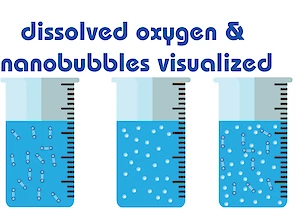
Low dissolved oxygen (DO) limits biological activity in aquaculture, horticulture, and water treatment. Nanobubble technology solves this by adding two levels of oxygen to water: dissolved O2 and suspended gas cavities. This page covers DO fundamentals, saturation tables, and the role of enhanced aeration.
The GaLF-CIP is a custom-built ultrafine nanobubble generator for the food and beverage industry. It produces hydrogen or oxygen nanobubble drinking water — and is also compatible with ozone, CO₂ and nitrogen. Installed at bottling facilities across Japan with a capacity up to 4,000 L/hr. Built with Clean-In-Place (CIP) certified sanitary fittings to meet international certification requirements. Specify your requirements and we build to order.ao
The ELP-200 is a polarographic dissolved ozone sensor designed for wastewater treatment, pharmaceutical production, and process water disinfection control. It uses a gas-permeable membrane and three-electrode design for stable, interference-free ozone measurement from 0-10 mg/L, with automatic temperature compensation and isolated 4-20 mA output.
The Acniti ozone destructor safely eliminates residual ozone after treatment processes in water and air applications. Using a manganese-palladium catalyst, it converts excess O3 to pure oxygen with minimal maintenance. The modular design scales from small lab setups to large ozone contact tanks - ideal for ozone system operators who need a reliable, low-hassle off-gas solution.
Acniti offers dissolved oxygen controllers and handheld monitors designed for nanobubble generators and oxygen generators. The DO controller automates aeration using PLC-based setpoint control, while the Polaris handheld sensor provides portable DO measurement with NFC and Bluetooth. Both target aquaculture, shrimp farming, and high-DO water treatment applications.
The Oxiti Ozone is a compact PSA ozone generator with a built-in oxygen feed, producing up to 8 LPM of high-purity oxygen and up to 20 g/h of ozone from a single unit. The integrated PSA system guarantees stable, high-concentration ozone output without external oxygen supply. Built for water treatment, aquaculture research, and industrial disinfection.
The Turbiti Fusion is a plug-and-play micro nanobubble generator using a turbulent mixer-ejector principle to produce billions of ultrafine bubbles per minute. With flow rates of 540–900 L/h and compatibility with O₂, air, CO₂, N₂ and ozone, it delivers superior dissolved oxygen levels for water treatment, aquaculture, and biochemical processes. Available in 115V and 230V configurations.
Traditional nanobubble generators rely on pumps and pressure, which wastes energy and stirs up water. The microStar uses patented hammermill rotation - a shaft spinning at 3,400 RPM crushes ozone gas into high-concentration nanobubbles with zero turbulence. Available in three sizes, from lab research to industrial disinfection and seawater treatment.
acniti brand assets and resources, corporate house-style
Turbiti Fusion Integra combines ozone nanobubble generator with integrated, oxygen and ozone generator, includes a mixing tank, sensor and ozone destructor
The ECD-100 specification sheet provides complete technical details for this colored wastewater detector including electrical requirements, dimensional data, and sensor configuration. Designed for continuous RGB-LED color monitoring in industrial wastewater applications with automatic air purge cleaning and 4-20mA analog outputs for seamless integration into existing control systems.
Nanobubbles can be measured by the same technology as measuring small particles. You can measure bubbles by camera (count pixel size) or laser (count blackout time), also as a simple method to know number index, you can refer information of turbidity. When you measure UFB, most common way is to analyze Brownian Motion.
Acniti accepts bank payments, TransferWise, PayPal and many major credit cards Visa, MasterCard, American Express, Discover, JCB, Diners Club and EnRoute. Acniti accepts payments in the following currencies Euro, Japanese Yen, US dollar, British Pound, Australian Dollars, New Zealand Dollars, Singapore Dollars
Interested in nanobubble generators, PSA oxygen generators, or industrial inlet filters? Our engineers are ready to answer your technical questions, provide product quotes, and guide you to the right solution for your application.
Discover the ultrafine GaLF, a cutting-edge generator delivering the highest concentration of nanobubbles in the Finebubble industry. Designed for researchers, universities, and labs, it’s perfect for fundamental research and product development. With advanced PLC controls and flexible gas options, this compact and robust unit ensures peak performance and easy operation. Read more to see how nanobubbles can boost cleaning, plant growth, and fish health.
Explore Henry's law in acniti nanobubble technology: learn how gas solubility, pressure and supersaturation influence micro and nanobubble generation.
Explore zeta potential's role in nanobubble stability and surface charge dynamics. Learn how this key parameter affects gas transfer efficiency and applications
Bubbles are all around us, in our foods, beer, pop drinks bread and cheese, but also in the bricks of our house. Bubbles are gas-filled cavities in water, the lifetime of a bubble is short at most a few minutes, only ultra-fine bubbles are stable for longer periods like months, that is making them very special and that enables us to change the properties of water.
Recommended pump for the turbiti 737 land based or ozone systems Grundfos CM10-1