





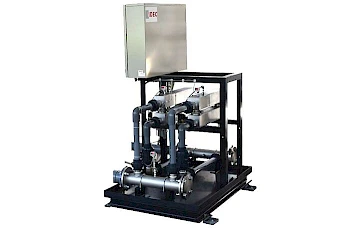
aquaGaLF nanobubble generator
Links
aquaGaLF is a nanobubble generator for clean water applications including drinking water treatment, aquaculture, and industrial process water. Its hybrid technology produces ultrafine bubbles that raise dissolved oxygen levels and improve water quality. Available in 1.5, 6, and 12 m3/h. Requires particle-free water.
Selecting a nanobubble generator can be a daunting task when you are new to the technology. In the following article we explain the differences of the various units. This helps you to select the best nanobubble generator for your research, application development or ultrafine bubble production.
Manoa lettuce is a lettuce variety susceptible to tipburn. Tipburn is the drying and dying of leaf tissue along the edges of the leaf. During a test at a grower in Hawaii it was shown that by increasing the DO levels and adding ultrafine bubbles, reduction of tipburn is realized and quality and production improvements are made.
The aquaGaLF 15 is a pressurized dissolution nanobubble generator designed for agricultural and horticultural water treatment. It delivers 25 L/min (1.5 M³/hr) of ultrafine bubble-enriched water with PLC control and multi-gas compatibility, including oxygen, CO₂, and Nitrogen.
The aquaGaLF 60 is a pressurized dissolution nanobubble generator with a water flow of 100 LPM (6 m³/hr) and gas flow of 4 LPM at 130 kPa. Designed for agricultural and water treatment applications, it runs on 3-phase 200–240 VAC and supports non-corrosive gases including oxygen, nitrogen, CO₂, and ambient air.
The aquaGaLF 120 is an industrial nanobubble generator using pressurized dissolution technology to produce ultrafine bubbles at 200 LPM. Designed for continuous operation in agriculture, aquaculture, and water treatment, it supports O₂, CO₂, N₂, and ambient air. Full metric and imperial specifications below.
Choosing the wrong benchtop nanobubble generator derails experimental reproducibility. Gas chemistry, shear profile, and thermal budget all determine whether miniGaLF, Turbiti Fusion, or microStar fits your protocol. This guide breaks down all three systems so your hardware matches your science, not the other way around.