





Hammermill Rotation Technology – Motor-Driven Nanobubble Technology Without Pumps
hammermill rotation technology
Acniti's patented hammermill rotation technology redefines nanobubble generation by eliminating the need for high-pressure pumps. A motor-driven shaft with precision-mounted hammers spins at 3,400 RPM inside a vertical tube, crushing injected gas into ultra-fine nanobubbles through mechanical shearing—not hydraulic force.
Water and gas enter from the top, while hammers at the shaft bottom dissolve and fragment gas molecules into high-concentration nanobubbles with zero turbulence. Because the system doesn't circulate large volumes of water or require pressurization, it delivers the lowest energy consumption per nanobubble in the industry.
The microStar series leverages this hammermill design for ozone gas applications and harsh environments like seawater treatment, where corrosion resistance and energy efficiency are critical.
Links
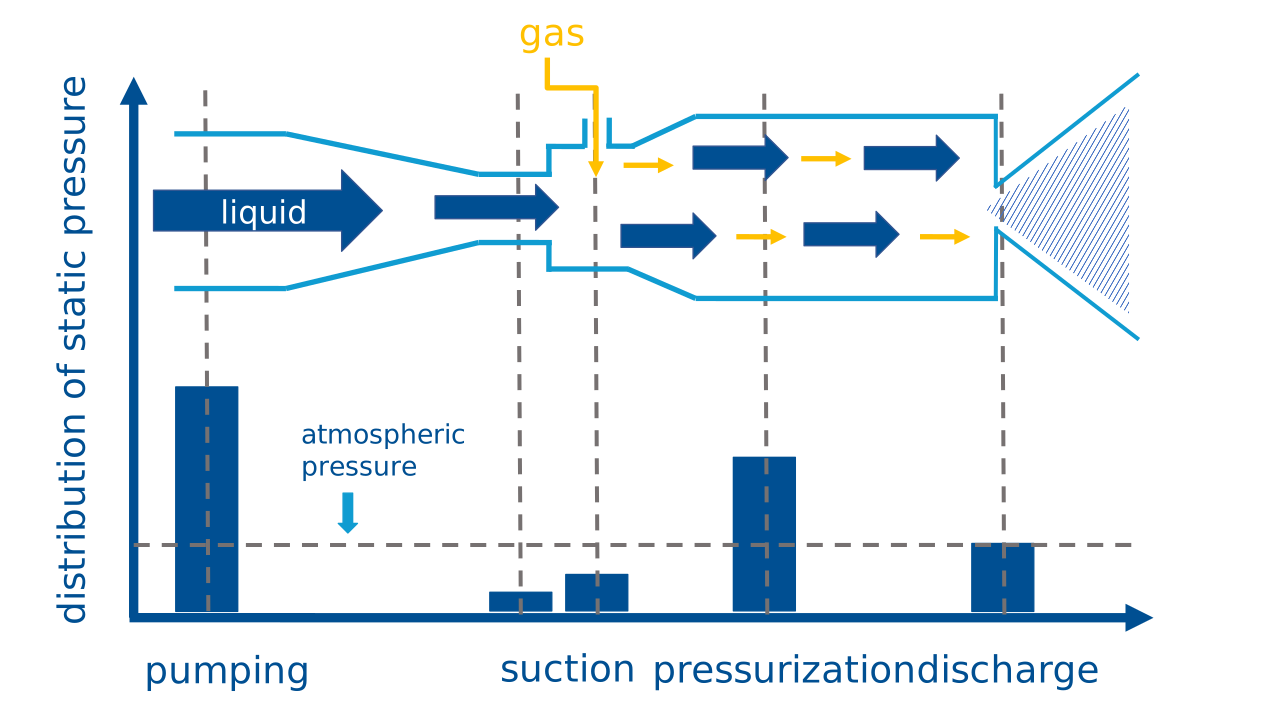
There are various technologies to generate nanobubbles (ultrafine bubbles). This article gives an overview of the most used techniques, such as pressurized dissolution, static mixers, and rotational flow.
Magnetic Hammermill Rotation: Ultra-Low Energy Nanobubble Generation at 3400 RPM
Choosing the wrong benchtop nanobubble generator derails experimental reproducibility. Gas chemistry, shear profile, and thermal budget all determine whether miniGaLF, Turbiti Fusion, or microStar fits your protocol. This guide breaks down all three systems so your hardware matches your science, not the other way around.
Traditional nanobubble generators rely on pumps and pressure, which wastes energy and stirs up water. The microStar uses patented hammermill rotation - a shaft spinning at 3,400 RPM crushes ozone gas into high-concentration nanobubbles with zero turbulence. Available in three sizes, from lab research to industrial disinfection and seawater treatment.