




application development
Links
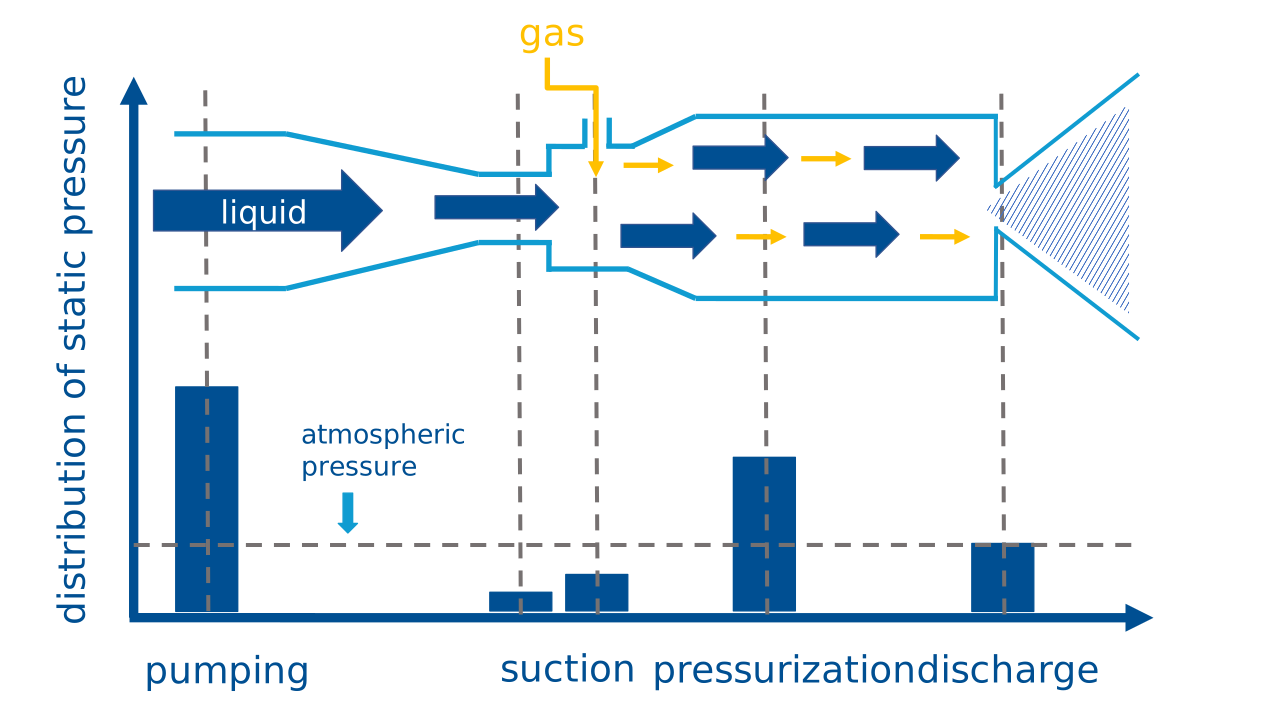
Selecting a nanobubble generator can be a daunting task when you are new to the technology. In the following article we explain the differences of the various units. This helps you to select the best nanobubble generator for your research, application development or ultrafine bubble production.
Concrete is the main part of building materials and it is almost impossible to replace concrete with other natural resources. According to several scientific articles, the application of nanobubbles improved the compressive and tensile strength of concrete. on the other hand, mixture of zeolite, Chekneh pozzolan, and nanobubbles water significantly improve the strength and durability of the concrete, which is a meaningful alternative to cement and mixing water to reduce air pollution, increase concrete performance, and reduce concrete production costs. Nanobubbles technology is the best, cheapest, simplest and safest way to improve the mechanical feature of constructional materials.
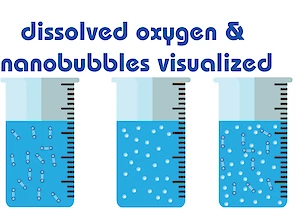
Bubbles are all around us, in our foods, beer, pop drinks bread and cheese, but also in the bricks of our house. Bubbles are gas-filled cavities in water, the lifetime of a bubble is short at most a few minutes, only ultra-fine bubbles are stable for longer periods like months, that is making them very special and that enables us to change the properties of water.
The Ultramax O2 is a portable 3-in-1 oxygen gas analyzer that measures O2 purity, flow rate, and pressure in one compact device. Using ultrasonic sensor technology, it requires no sensor replacements and no field calibration - ideal for oxygen generator monitoring, industrial gas analysis, and environmental testing.
Great things happen when the world agrees, fine bubbles are an innovative technology, but without proper standards for the industry development, there are obstacles. From 2013 ISO started the creation of an International Standard for fine bubbles popularly know as nanobubbles.
ISO TC281 sets standards for ultrafine bubbles, improving water oxygenation and boosting plant growth with Acniti technology.
Oxygen plays an important role in plant respiration, which causes energy production and plant growth. Increasing the percentage of oxygen in water improves the root structure and the activity of useful microbes in the rhizosphere. Naturally, an effective and practical system can increase productivity by improving the quality of irrigation water and increasing dissolved oxygen in irrigation water. Acniti oxygen concentrator and Acniti turbiti O3 are very effective supplements for irrigation of agricultural fields and at the same time improve water quality and increase dissolved oxygen (DO) and ozone in irrigation water. To determine the role of oxygen and ozone nanobubbles in the growth of lettuce, an experimental research was conducted. Research showed that by using Acniti nanobubbles generators, will increase the level of dissolved oxygen in water, and makes the roots of lettuce grow more and its weight increases significantly.
Acniti is a Japanese manufacturer specializing in nanobubble equipment and industrial oxygen concentrators. Based in Osaka since 2017, we are the only provider offering three distinct nanobubble generation technologies: pressurized dissolution, turbulent static mixer, and hammer-mill rotation. Our solutions serve universities, water treatment, aquaculture, agriculture, mining, wastewater remediation, and industrial cleaning applications globally. Acniti products integrate robust PSA oxygen concentrators with proprietary nanobubble generators for 24/7 industrial operation. Acniti does not supply oxygen concentrators for medical purposes.
Discover the ultrafine GaLF, a cutting-edge generator delivering the highest concentration of nanobubbles in the Finebubble industry. Designed for researchers, universities, and labs, it’s perfect for fundamental research and product development. With advanced PLC controls and flexible gas options, this compact and robust unit ensures peak performance and easy operation. Read more to see how nanobubbles can boost cleaning, plant growth, and fish health.
The electrical properties of gas bubbles are important in determining the interaction of nano-bubbles if and when they merge together and how they interact with other materials such as solid particles or oil droplets. Knowledge about this helps application development in for example, protein skimmers, froth flotation, food processing, washing surfaces and purification.
Nanobubbles can be measured by the same technology as measuring small particles. You can measure bubbles by camera (count pixel size) or laser (count blackout time), also as a simple method to know number index, you can refer information of turbidity. When you measure UFB, most common way is to analyze Brownian Motion.